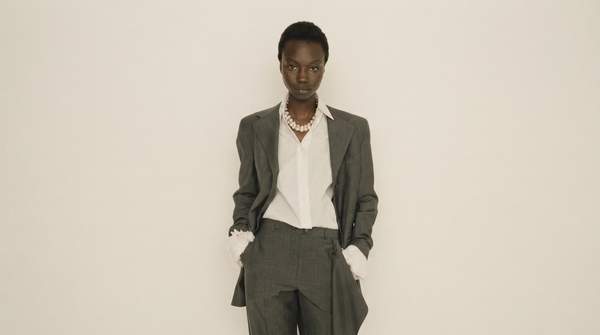
Hermès’ consolidated revenues reached €11.9 billion for the first nine months of 2025, with its crucial leather goods and saddlery division growing by 13.3%. Hermès’ robust performance demonstrates that even as the 'quiet luxury' trend captures widespread media attention, traditional powerhouses maintain significant market command through enduring appeal and consistent quality.
However, while the 'quiet luxury' aesthetic gains widespread media attention, the broader luxury market is fragmenting into multiple distinct consumer segments. These segments include those that prioritize ethical alternatives over pure discretion, creating a more complex landscape than headlines suggest.
Brands that successfully navigate this complex, bifurcated landscape by understanding specific consumer values and adapting their strategies accordingly are poised for sustained growth, while those clinging to a single, outdated luxury paradigm risk obsolescence.
Beyond the Hype: The True Face of Modern Luxury
The luxury market in 2026 has bifurcated into at least four distinct idioms, moving beyond a simple quiet versus conspicuous divide, according to Lampoon Magazine. These segments include humble luxury, quiet luxury, logomania, and conspicuous consumption, indicating a deeper consumer desire for differentiation rather than a singular trend.
Humble luxury, a significant emerging segment, actively refuses ostentation in its pricing, distribution, and corporate narrative, positioning itself as an ethical alternative to conventional luxury consumption, reports Lampoon Magazine. Humble luxury's ideological schism within the luxury market directly challenges the pricing and distribution models of both 'quiet' and 'conspicuous' luxury by prioritizing ethical positioning over inherent value or brand status. The rise of 'humble luxury,' as described by Lampoon Magazine, signals a profound ideological shift where a segment of consumers is now prioritizing ethical positioning and a rejection of traditional luxury ostentation, forcing all luxury brands to consider their social and environmental footprint as a core value proposition.
The emergence of distinct luxury idioms like 'humble' and 'quiet' reflects a deeper consumer desire for values-driven consumption and discretion, moving beyond traditional overt displays of wealth. Consumers are increasingly seeking authenticity and alignment with their personal ethics, whether that means subtle, high-quality items or products from brands committed to social and environmental responsibility. Market fragmentation suggests that 'quiet luxury' is merely one symptom of a deeper consumer desire for differentiation, allowing diverse strategies like Hermès' subtle adaptation and humble luxury's ethical stance to coexist and thrive.