Kate Millett's public retreat examined with new theories

The intellectual community in 2026 has initiated a renewed examination into the later years of influential feminist writer Kate Millett, particularly her gradual retreat from public engagement.

AV
Adrian Vale

June 13, 2026 · 4 min read

An empty armchair in a dimly lit study, representing the public retreat of feminist writer Kate Millett.

The intellectual community in 2026 has initiated a renewed examination into the later years of influential feminist writer Kate Millett, particularly her gradual retreat from public engagement. This re-evaluation aims to fully comprehend the trajectory of her profound cultural impact, offering a nuanced perspective on her later contributions.

But the complexities of interpreting a life lived largely out of the spotlight, especially in the decade preceding her death, present significant analytical challenges. Understanding such periods requires careful contextualization, according to The New Yorker. The nuances of her private life often contrasted with her early public persona.

The ongoing 2026 investigation into Kate Millett's disappearance confronts persistent challenges, despite the emergence of new analytical frameworks.

Examining Millett's Public Retreat

Kate Millett, born in 1934, achieved widespread recognition with her 1970 book, "Sexual Politics," a foundational text in feminist theory, according to The New Yorker. Her work reshaped discourse around gender and power.

After her initial public prominence, Millett experienced periods of intense scrutiny and personal struggles, including documented experiences with mental health. These challenges often influenced her public presence.

She spent significant portions of her later life between her farm in Poughkeepsie, New York, and Paris, France, where she ultimately passed away, according to The New York Times. This geographical movement coincided with a decrease in her visible public advocacy and media presence in the decades leading up to her 2017 death.

The nature of "cold cases" often involves re-examining historical data and narratives to uncover new insights, a process applicable to biographical studies, according to Psychological Contributions to Cold Case Investigations - PMC - NIH. Her final years were marked by a quieter existence, contrasting sharply with her earlier, more confrontational public persona.
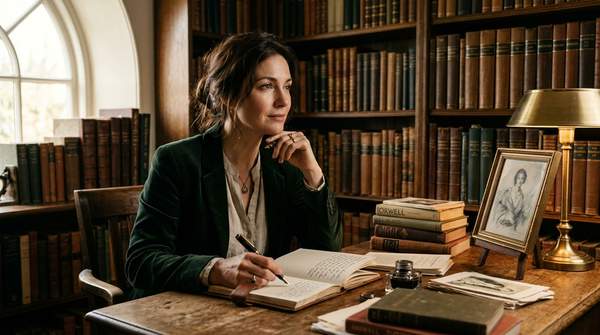

New Perspectives on Her Later Work

A recent symposium in March 2026, hosted by the Institute for Gender Studies, focused on Millett's lesser-known works from the 1990s and 2000s. This event sought to re-contextualize her contributions beyond "Sexual Politics."

Scholars presented analyses highlighting Millett's evolving perspectives on feminism and personal identity during her more reclusive periods. These discussions shed light on her intellectual journey and the maturation of her thought. The re-evaluation emphasizes how figures "disappear" from mainstream attention, only for their work to be re-discovered and re-appraised years later.

This process often involves integrating historical and biographical data from various sources to form a complete picture, according to The Search Process: Integrating the Investigation and Identification .... The renewed academic interest aims to fill gaps in the understanding of her later contributions.

Who Was Kate Millett?

Kate Millett (1934-2017) was an American feminist writer, activist, and artist whose radical theories reshaped academic discourse. Her influence extended beyond academia into popular culture, sparking widespread debate.

Her seminal book, "Sexual Politics," critically analyzed patriarchy in Western literature, particularly in the works of D.H. Lawrence, Henry Miller, and Norman Mailer, according to The New Yorker. This work solidified her status as a leading voice in the feminist movement.

Millett's life was also characterized by her advocacy for gay rights and mental health awareness, often drawing from her own personal experiences. She remained a complex and often controversial figure throughout her career, challenging societal norms.

What Comes Next for Millett's Legacy?

Future academic endeavors in 2026 will likely include expanded digital archives of Millett's personal papers and correspondence. This will provide researchers with more comprehensive access to her intellectual development and private reflections.

Curators are also planning a retrospective art exhibition for early 2027, showcasing Millett's visual art, which often explored themes of gender and power. This aims to broaden public understanding of her multifaceted career beyond her written works.

These efforts seek to ensure Millett's "disappearance" from the immediate cultural spotlight does not diminish her long-term influence. By Q4 2026, several new critical essays on her later period are expected to be published.

Answering Your Questions

What is the latest on the Kate Millett disappearance?

The 2026 focus is a scholarly re-examination of Kate Millett's later life, specifically her retreat from public visibility. This intellectual "investigation" aims to understand the reasons and impact of her decreased public engagement before her 2017 death.

Who is investigating the Kate Millett case?

Academic institutions and cultural critics are leading the re-evaluation of Millett's legacy and her period of public withdrawal. The Institute for Gender Studies recently hosted a symposium on her lesser-known works and evolving perspectives, bringing together diverse scholarly analyses.

When was Kate Millett last seen actively in public life?

While Kate Millett passed away in 2017 in Paris, her active public advocacy and media presence significantly decreased in the decades prior. Her visible engagement shifted from the confrontational public persona of her early career to a more private existence, spending much time at her Poughkeepsie farm.